NESS presents
Before They Become Their Own Critic.
Help your child develop an inner voice that encourages courage, confidence, emotional resilience, and self-belief.
Your child's inner dialogue is developing every day. Discover practical tools that help you become more intentional about the language, habits, and experiences that influence it.
The words children hear today help shape the words they tell themselves tomorrow.
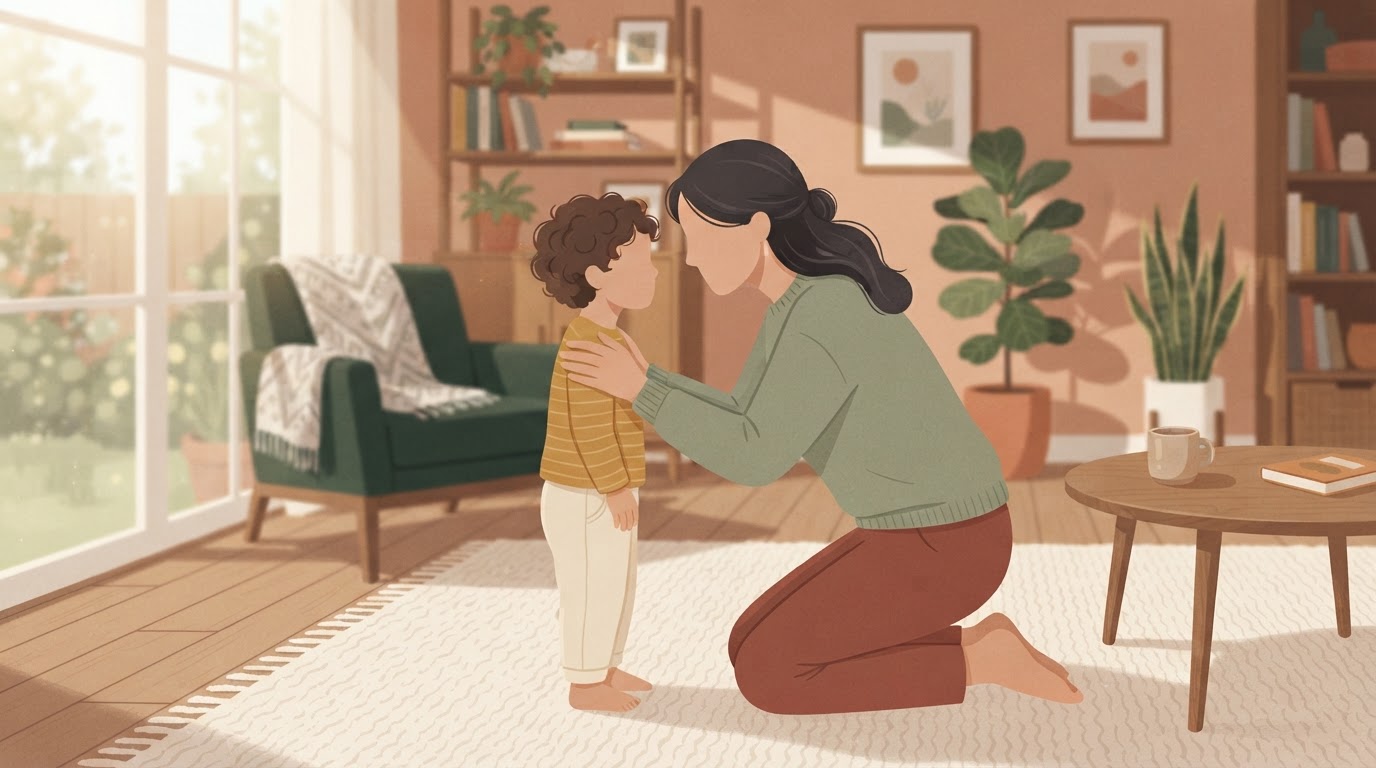
See a Language Upgrade in Motion
What We Often Say
"Stop crying."
What We Can Say Instead
"It's okay to cry. I'm here."
What Our Child Can Learn to Say Internally
"My feelings are allowed. I can learn to work through them."
Our Core Philosophy
Correct the behavior without condemning the identity.
Behavioral correction addresses what a child did. It names the action, holds the boundary, and points toward repair.
Behavioral direction goes further — it tells the child what to do instead, giving them a path forward rather than only a line they crossed.
Identity development is the deepest layer. It protects the child's sense of who they are, so correction never becomes condemnation. A child who hears "that choice hurt someone" learns something very different from a child who hears "you're bad."
A note on this model: this is our educational framework, informed by developmental psychology. It is not a validated clinical model or a deterministic process — every child and family is different.
The Path We Watch
- 1External Dialogue
- 2Private Speech
- 3Internal Dialogue
- 4Self-Perception
- 5Behavior
The words children hear become the words they say to themselves — and those words shape how they see themselves and what they do.
Today's Daily Language Upgrade
"You're too little to do that."
"That's a big job. Let's figure out what part you can do."
"I can do the part that's right for me."
Six Learning Pillars
A whole-child approach to the inner voice
Pillar 1
The Words We Use
Parental communication and identity
Explore pillarPillar 2
The Feelings We Feel
Emotional and physiological regulation
Explore pillarPillar 3
The Brain We Have
ADHD, executive functioning, attention, neurodiversity
Explore pillarPillar 4
The Courage We Build
Anxiety, independence, self-efficacy
Explore pillarPillar 5
The Voice Within
Children's SelfTalk and healthy identity
Explore pillarPillar 6
The Parent We Become
Parental SelfTalk and habits
Explore pillar